
The Bathroom Design Guide: Sizes, Layouts & Mistakes to Avoid

FULLY ILLUSTRATED · FROM THE 07SKETCHES SKETCHBOOK
A bathroom is one of the smallest rooms in a home, yet it is one of the hardest to get right. It packs more plumbing, moisture, hard surfaces and daily movement into a few square metres than any other space in the house — which is exactly why building codes and ergonomics have settled on standard sizes for nearly everything in it. Every fixture has a footprint, every fixture needs breathing room around it, and a few centimetres in the wrong place can turn a daily routine into a daily annoyance.
In this illustrated guide, we walk through the essential numbers and layout principles behind a comfortable, safe and beautiful bathroom — all explained through hand-drawn sketches, the way we like to do things at 07Sketches.
Measure twice, sketch once — almost every bathroom problem is a clearance problem in disguise.
01 — Know Your Bathroom Elements (and Their Sizes)
Before sketching a single wall, get familiar with the building blocks: the W.C., the sink, the bathtub, the bidet and the vanity. Each comes in standard dimensions that drive the whole plan. A wall-hung or two-piece W.C. needs roughly 540 mm of depth, an alcove bathtub runs about 1520 mm long, a free-standing tub stretches to around 1700 mm, and countertop sinks range from compact 400 mm rounds to generous 1400 mm double-sink slabs. Knowing these numbers by heart makes every layout decision faster and safer.

02 — The Clearances That Make a Bathroom Comfortable
A well-designed bathroom is comfortable to use, safe, durable and easy to clean — and that comfort is built on minimum clearances. Allow 762 mm of free space in front of the vanity, W.C. and bathtub. Keep at least 430 mm from the centre of the W.C. to any wall or obstacle. A shower should never shrink below 914 x 914 mm, and the bathroom door itself wants about 863 mm of width. Smaller details matter too: toilet paper holders sit around 660 mm high, towel hangers between 800 and 1200 mm, and shower heads between 1955 and 2057 mm.

03 — Mistakes to Avoid While Designing a Bathroom
The most common mistakes are placement mistakes. If the W.C. and the entry door collide, anyone walking in risks bumping straight into the shower glass — a genuine safety hazard, not just an inconvenience. The other classic error is placing the toilet directly in front of the bathroom door, putting it in full view from the hallway or kitchen. The fix in both cases is the same: pull the W.C. and glass enclosures away from the door swing, and let the first thing you see be the vanity or bathtub instead.

04 — Design for Everyone: Accessible Vanities
Good design works for every body. Providing clear floor space and clearance for a wheelchair footrest is crucial: plan for a 910 mm clear zone in front of the sink and a 1520 mm turning radius, which may extend up to about 480 mm into the open knee space beneath the counter. That knee space is wonderfully flexible — it lets anyone sit or stand at the vanity, and it can be finished with retractable doors, folding doors or a simple protective panel, depending on how much storage you want to keep.

05 — Master Bathroom Layouts That Work
The master bathroom is the most generous bathroom in the house — connected to the master bedroom and meant for private, everyday luxury. From a compact 1525 mm wide plan to a roomy 3200 x 2200 mm suite with a double-sink vanity, these five layouts show how the same elements — shower, bathtub, W.C. and vanity — can be rearranged to suit very different footprints while still respecting every clearance rule from earlier in this guide.

06 — A Warm, Energizing Palette
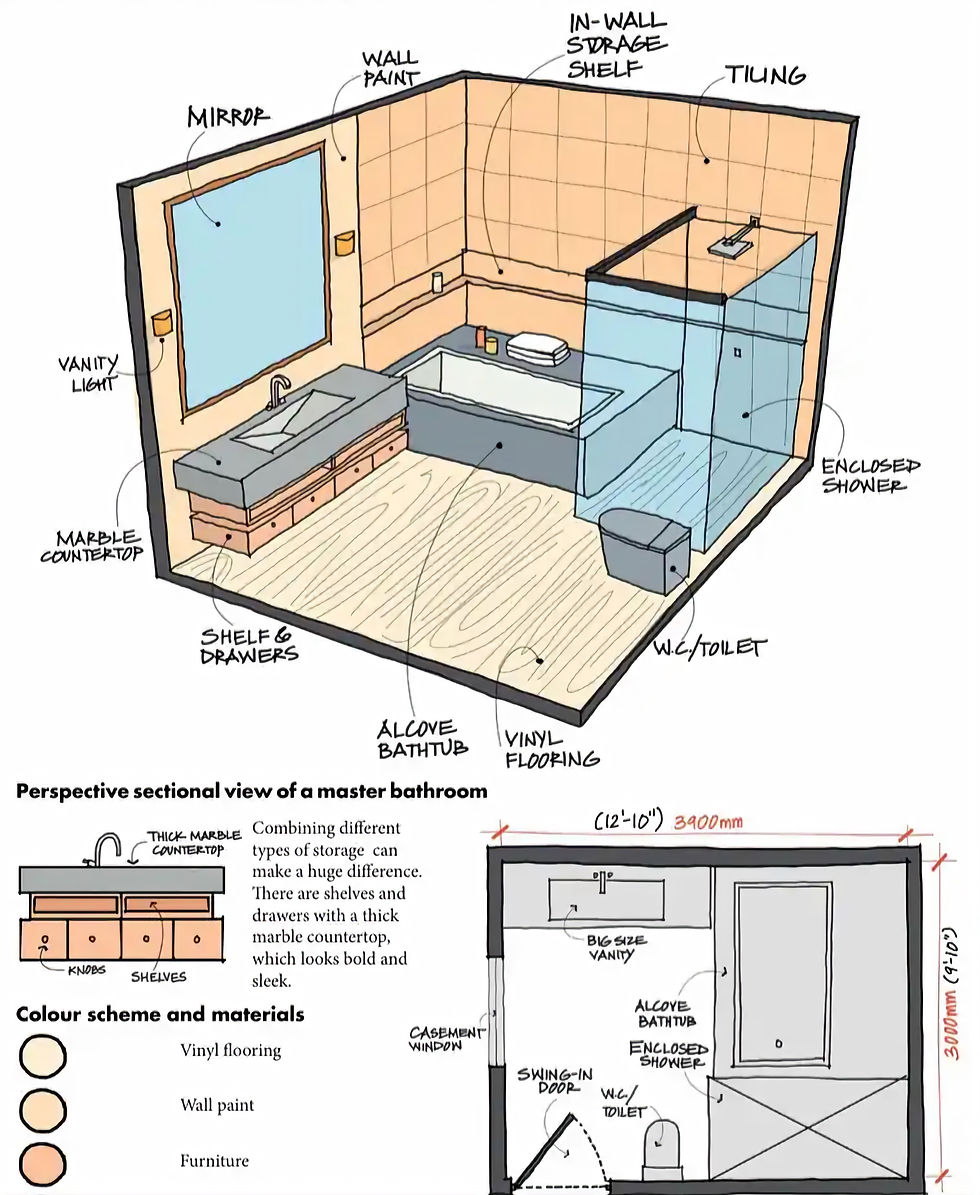
Want to feel energized the moment you walk in? Lean into browns, reds and oranges, then ground them with contrasting dark gray elements — a bathtub here, a sink countertop there. In this master bathroom, ceramic tile clads the walls, warm vinyl flooring softens the floor, and a thick marble countertop over mixed shelves and drawers keeps the storage looking bold and sleek. It is proof that the technical rules and the creative choices are never separate: the palette only shines because the plan underneath it works.
Keep Sketching
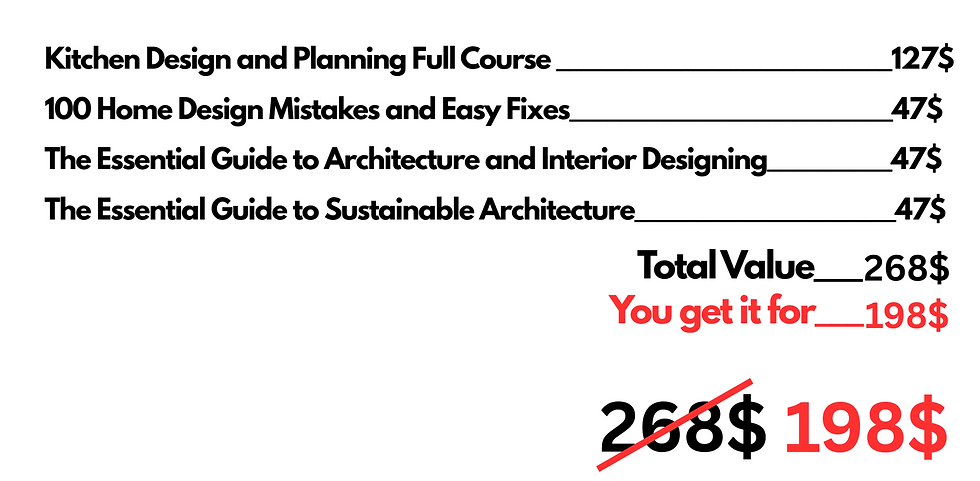
Every drawing in this post comes from the fully illustrated 07Sketches eBook bundle — The Essential Guide to Architecture and Interior Designing and The Essential Guide to Sustainable Architecture, 300 pages of hand-drawn design knowledge for students, architects and designers. You can find the complete bundle at 07sketches.teachable.com.



Comments